
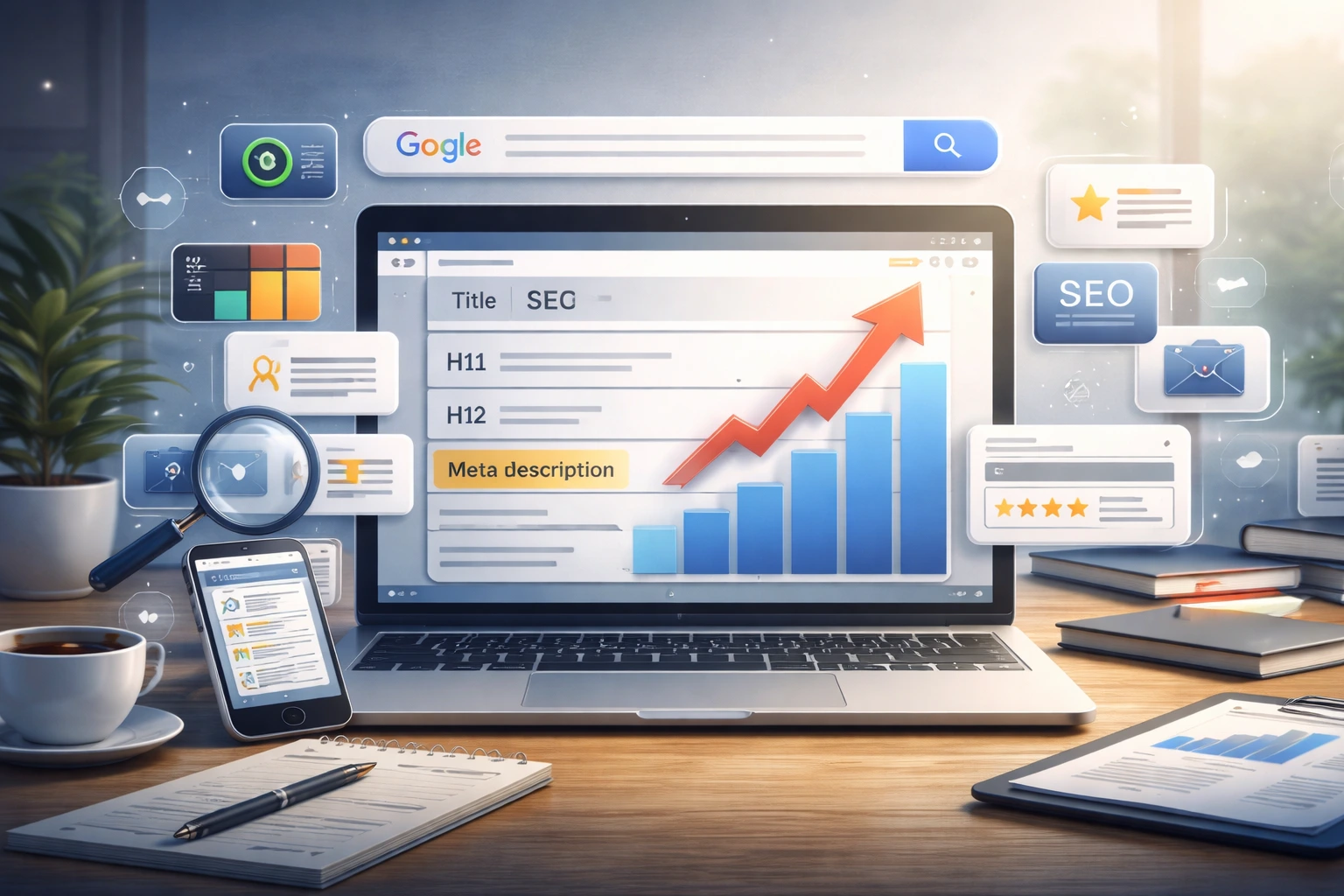
If you’ve been scratching your head wondering why your website isn’t ranking higher on Google, the problem might not be backlinks; it’s your on-page SEO. Understanding what is on-page SEO is key because it’s everything you control on your site, from titles and headings to meta descriptions, images, and content structure.
In 2026, AI-powered search engines are smarter than ever, looking at context, user intent, engagement, and page organisation – not just keywords. I’ve seen sites jump from page three to page one simply by improving headings, meta tags, and adding structured data. If you want your website to actually perform and beat the competition, getting your on-page SEO right is non-negotiable.
What is On-Page SEO and Why It’s Still Important
While off-page SEO concentrates on things like backlinks and mentions, understanding what is on-page SEO helps you improve the areas of your website that you control. Both are important, but external efforts won’t do anything to improve your on-page SEO. In 2026, search engines, especially AI-powered ones, look at more than just words; they also look at the nature of your content, the speed at which your sites load, and the quality of your responses to user queries.
Why ignoring on-page SEO can undo all other SEO efforts
I’ve observed clients invest a lot of time and money in link-building with almost no return. Why? Search engines find it difficult to figure out your content when you have poor on-page SEO. If you write a great article but keep it on an unorganised, chaotic website, Google will not be able to rank it.
How on-page ranking signals are evolving due to AI-powered search
With AI tools becoming increasingly sensitive to understanding human intent and context, the importance of AI and SEO, including semantic keywords, content depth, and structured data, will only increase. In a few words, your on-page SEO needs to be way more organised because that’s how you can stay in the game.
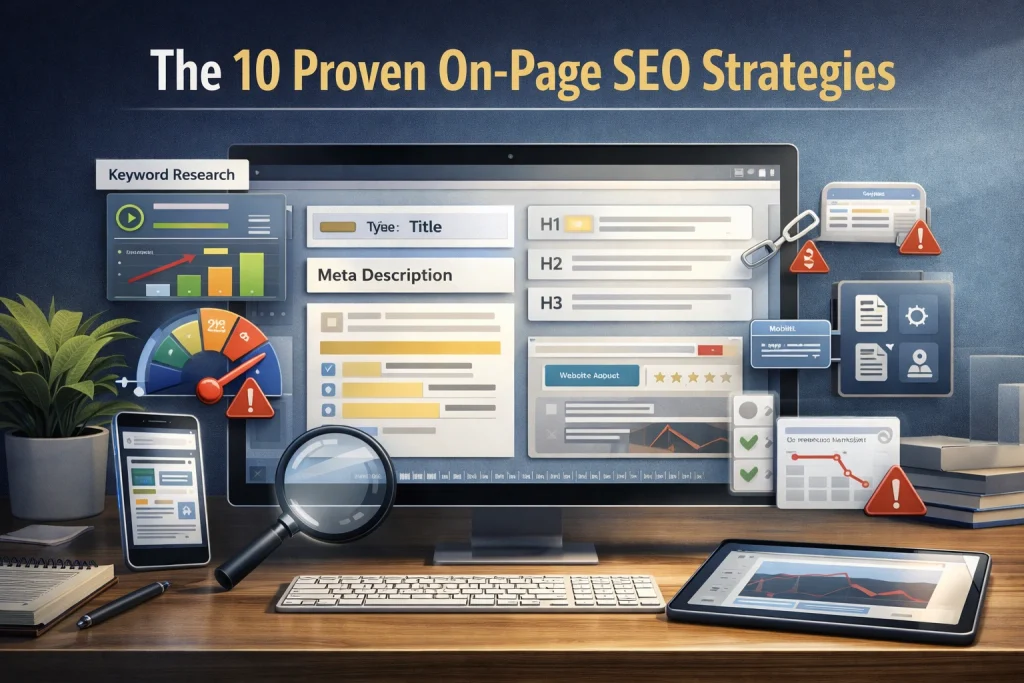
The 10 Proven On-Page SEO Strategies
1. Comprehensive Research on Keywords and Search Intent
Finding out what users are genuinely searching for is the first step. Don’t limit your research to well-known terms. Regardless of whether the content is transactional, informative, or navigational, I always map keywords to search intent. Focus on including LSI keywords and the differences. naturally rather than stuffing your text with keywords.
- Use Google’s “People also ask” and AI keyword tools to capture intent-focused phrases. Then, integrate them naturally in headings and content.
For deeper keyword planning insights, check our guide on keyword research for SEO to understand how it strengthens modern SEO strategy.
2. Titles and Meta Descriptions That Are SEO-Friendly
In addition to being essential for Google, your titles and meta descriptions also function as your first impression. Put your primary keywords front and center and make the title legible. Instead of just stuffing meta descriptions with keywords, they should encourage clicks.
Example:
- “Tips for On-Page SEO” is weak.
- Better: “Use These On-Page SEO Techniques to Enhance Your Google Rankings in 2026.”
3. Optimized Headings & Content Structure
Headings are crucial for readers and search engines alike. Use a clear H1, H2, and H3 hierarchy and use bullet points, numbered lists, or tables to make your content simple to read.
- Enables users to quickly take the page.
- Improves AI understanding of content hierarchy.
- Makes key points stand out for better engagement.
4. Content Depth & Quality Optimization
Prioritise resolving user issues over meeting word counts. Provide examples, case studies, and helpful guidance.
- Keeps readers on the page by offering genuine value.
- LSI keywords are naturally included for relevancy.
- Aids in the ranking of content for several relevant queries.
5. Multimedia and Image Efficiency
Multimedia and images are more than simply decoration; they improve SEO and engagement.
- Make use of appropriate alt text and informative file names.
- To increase website speed, reduce the size of photos.
- To extend stay time, include infographics, charts, and films.
6. Site Architecture & Internal Linking
Topic clusters are strengthened, and authority spreads through clever internal connections, and effective internal linking strategies explained in this guide on internal links can further improve content authority.
- For structured material, use a pillar-and-cluster model.
- For improved crawlability, contextually link similar pages.
- Assist in the understanding of content relationships by search engines.
7. Mobile Optimisation and Essential Web Elements
Speed and responsiveness are crucial when using mobile-first indexing.
- Make sure all devices have fast page loads.
- Make layouts that are easy to use and straightforward for mobile devices.
- Optimize scripts and graphics to cut down on load times.
8. Structured Data & Schema Markup
Structured data can assist search engines in retrieving important data from your pages.
- Use a FAQ, product schema, or article as appropriate.
- Enhances visibility in rich snippets and SERPs.
- Enhances AI’s knowledge and presentation of your content.
9. UX & Engagement Signals
A good user experience (UX) conveys quality to search engines and keeps visitors interested.
- Easy navigation, understandable layouts, and clear fonts
- Interaction is encouraged by strategically placed CTAs.
- To improve page layout, monitor dwell duration and scroll depth.
10. Regular On-Page SEO Audits & Optimization
Instead of being a one-time event, SEO is an ongoing effort.
- Check for missing alt text, broken links, and duplicate material.
- Update outdated posts and refresh examples.
- Over time, small, regular adjustments can improve rankings.
Boost your website’s visibility and rankings with our SEO services, focusing on strategy, optimization, and measurable results.
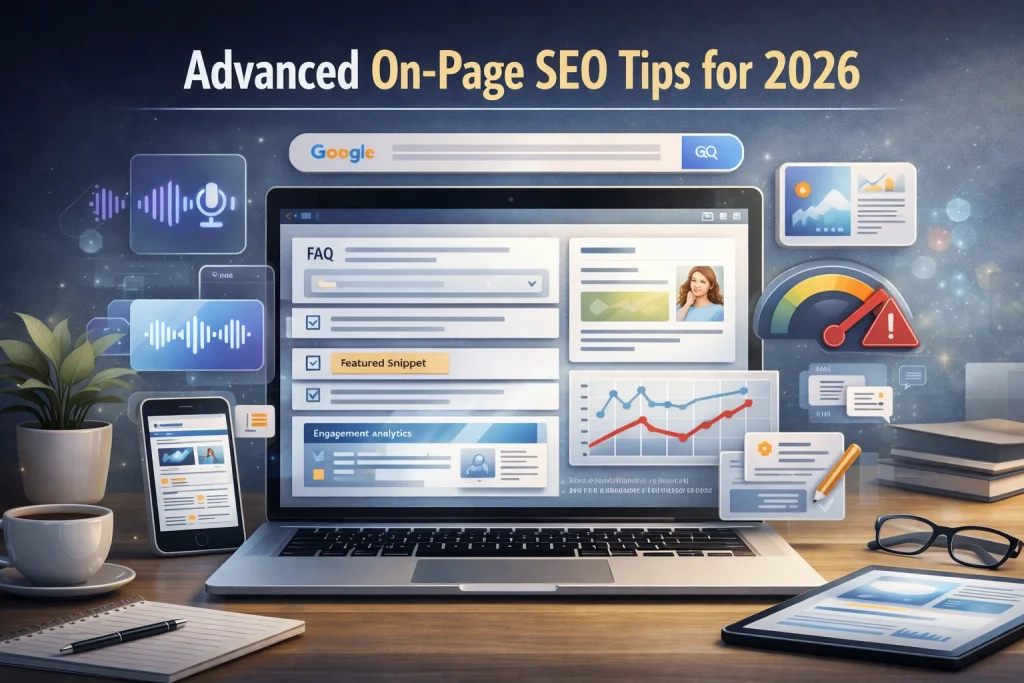
Advanced On-Page SEO Tips for 2026
1. AI Visibility Structure
But in order for search engines and AI systems to rapidly process the key value of your content, provide an FAQ and brief answers. Concise response blocks, clear titles, and brief explanations often increase your likelihood of appearing in featured snippets and AI-generated search summaries.
2. Make Voice and visual Optimal
Digital assistants continue to grow in popularity, and as such, your content should use conversational, descriptive phrasing that mirrors the ways in which consumers actually ask questions. You may improve your sites’ visibility in these more recent search formats by using conversational language, clear captions, and optimized photos.
3. Track Engagement Metrics
It is safe to say that these days, user interaction, time spent on the page, and CTR can definitely give a powerful signal about the quality of the content. Even technically optimized material will be seen by search engines as less useful if users leave too rapidly or do not engage.
4. Regularly Update Content
Search engines favour pages that stay fresh and relevant over time. Updating statistics, refining examples, and improving outdated sections can help maintain rankings and show that your content still reflects current search intent.
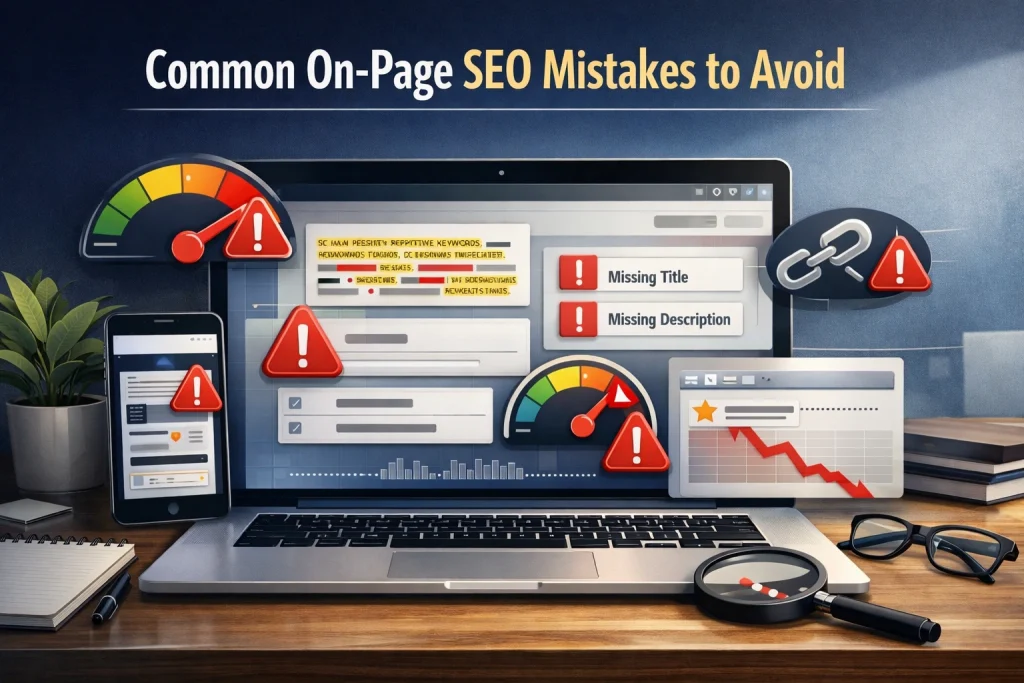
Common On-Page SEO Mistakes to Avoid
- Over-optimization or keyword stuffing: If you use too many keywords in your writing, those words may make the text more difficult to read and potentially might lead to penalties from search engines.
- Neglecting Meta Titles or Descriptions: Not paying attention to well-written meta titles and descriptions could result in lower click-through rates and make it less easy for the search engines to understand your content.
- Slow Pages or Bad Mobile Experience: Page-load time, as well as mobile experience, frustrates users and impacts rankings negatively.
- Neglecting Internal Linking or Semantic Structure: If you fail to link relevant content or arrange logically, it is harder for search engines to efficiently index your site.
- Ignoring AI-Driven SERP Features: You may lose out on prime visibility possibilities if you ignore features like response boxes, rich results, or featured snippets.
If you would like to schedule our SEO services, contact us for more specific information. Let’s work together to boost your website’s rankings and online visibility.
Final Thoughts
Understanding what on-page SEO is crucial; it’s more than just checking boxes; it’s about making your website understandable, practical, and advantageous To update the schema, enhance headers, modify titles, and optimise for interaction. Start examining your pages right now. Even small, consistent improvements might exceed competition in 2026.
FAQs
Does on-page SEO still matter for Google ranking?
All of these factors directly influence how Google ranks your sites based on crawlability, relevancy and user engagement signals.
What is the difference between off-page SEO and on-page SEO?
On-page SEO mainly focuses on the content of your website. Off-page SEO primarily focuses on external factors such as backlinks and brand mentions.
Will AI tools freely available to marketers help with on-page SEO, circa 2026?
Indeed, it can identify keyword opportunities, examine engagement metrics and recommend structural improvements.
Biggest on-page SEO mistakes and how to avoid them?
These 5 SEO mistakes are an attempt at keyword stuffing, not focusing on mobile optimisation, the lack of new technical structures in the content, no internal linking and AI SERP markers.