

Think about the last time you discovered a new café, clothing brand, or local service. There’s a good chance you found it on social media before you ever visited its website. That’s exactly why social media marketing for small businesses has become one of the smartest ways to get noticed. When done well, it helps you reach the right people, earn their trust, and turn casual followers into loyal customers.
The challenge is that simply posting every now and then won’t deliver real results. Fortunately, you don’t need a huge budget or thousands of followers to grow online. With the right strategy, consistent content, and a little creativity, your small business can stand out in a crowded feed. So,
where do we begin? Let’s first start with understanding what social media marketing actually is and how it can help your small business grow.
What Is Social Media Marketing for Small Businesses?
Social media marketing for businesses is about using places like Facebook, Instagram, TikTok, LinkedIn, Pinterest, and YouTube to tell people about your business. It helps you build trust with people by giving them useful things to read and look at and by talking to them in a way that means something.This is better than using old ways of advertising, as it helps you build trust through valuable content, meaningful interactions, and consistent engagement.
Consider running a handcrafted candle company, for instance. You share client reviews and behind-the-scenes clips in addition to product pictures. People interact with your material, come to trust your company, and finally turn into loyal followers.
Why Does Social Media Marketing Matter More Than Ever?
These days, people hardly ever buy something without first doing some research. That research usually starts on social media. They read customer reviews, look at recent posts and observe how a company engages with its audience. They can use this information to determine, if a brand is worth their time and money. So, being active on social media is now expected rather than a privilege.
Social media is a way for businesses to grow that is sometimes not possible with traditional marketing. Small business can use media to talk to new people and find new customers with good content without spending too much money on ads. When people send a messages share something, or leave a comment on media, it helps businesses build trust with them over time and have better relationships with their clients.
Social media really helps with this. Some of the biggest benefits of social media marketing include:
- Increasing brand recognition and online visibility.
- Establishing trust by regularly interacting with customers.
- Increasing sales, customers, and website traffic.
- Building a devoted following for your brand.
- Obtaining useful information through analysis and audience feedback.
Build a Social Media Marketing Strategy Before You Start
Although it is simple to feel excited about producing content, posting without a strategy commonly results in mixed results. Create a plan that gives each post a purpose before you commit your time and effort. Your social media activities become more targeted, efficient, and manageable with the correct starting point.
- Define Your Target Audience
Knowing your audience helps you create content that speaks directly to their needs. Think about their age, interests, challenges, and the platforms they use most. The better you understand your ideal customer, the easier it becomes to attract and engage them.
- Set Clear and Measurable Goals
Without clear goals, it’s difficult to know if your efforts are working. Decide whether you want to increase brand awareness, drive website traffic, generate leads, or boost sales. Keep your goals specific and measurable so you can track progress. Maybe you should set one SMART goal, such as increasing Instagram engagement by 15% within three months.
- Choose the Right Social Media Platforms
You do not need to be active on every platform. Focus on the ones where your target audience spends the time. The thing is, choosing the platforms for your target audience allows you to create better content, for your target audience and use your resources more effectively for your target audience.
- Build a Consistent Brand Identity
Your logo, colors, messaging, and tone of voice should stay consistent across all social media platforms.This is because when your business looks the same people start to trust your business. It is also easier for customers to remember your business when they see your logo and colors and they know what your business is about. Your business is more recognizable when everything is consistent.
- Create a Simple Social Media Action Plan
Turn your strategy into action. This means you have to plan out the content you want to share. You also have to set a schedule for when you will post this content. You have to review how you are doing on a regular basis. A simple plan keeps you organized and helps you stay consistent over time.
With your strategy in place, the next step is choosing the social media platforms that best fit your business and audience.
Which Social Media Platforms Are Best for Small Businesses?
The best social media platform for your small business is the one where your customers spend the most time. You do not have to be on every social media platform.Just pick one or two media platforms where the people you want to talk to are already spending their time.You’ll create better content, build stronger relationships, and get far better results.
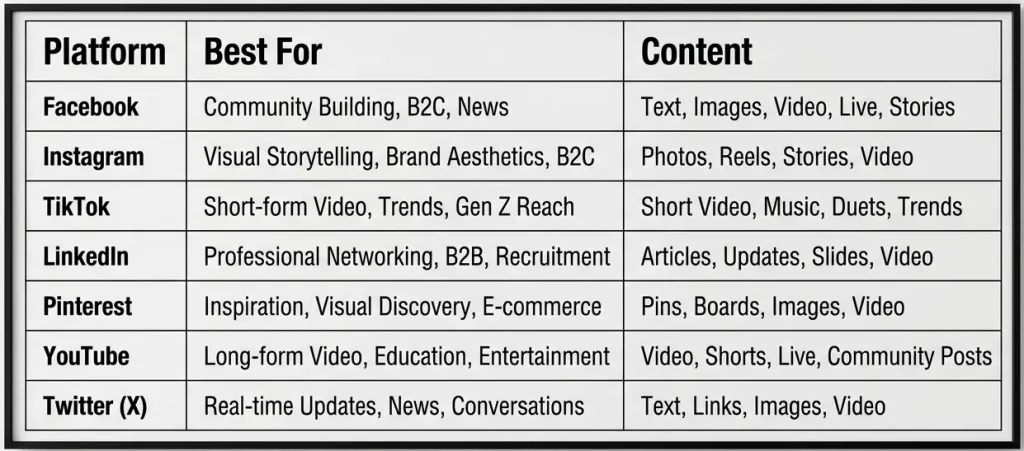
When you are starting, it is the best idea to start with one or two platforms that are right for your business. This way you can see what works for your business. As your business gets bigger and you have time, you can try other platforms. It is better to do a job on one or two platforms than to try to be on every platform at the same time.
Next, let’s explore the types of content that keep your audience engaged and encourage them to act.
What Types of Social Media Content Drive the Most Engagement?
A balanced social media content strategy also keeps your audience interested without making every post feel like a sales pitch.
Here are some of the most engaging content types for small businesses:
- Educational Content : Provide FAQs, quick tips, how-to instruct, or industry knowledge that address the issues of your audience.
- Behind-the-Scenes Content : Display your team, work area, or procedure used to create your goods and services to your followers.
- Customer Stories and Testimonials : To establish trust, highlight user-generated material, success stories, and good ratings.
- Product Demonstrations : Using quick video clips, demonstrate how your product functions, focus on its advantages, or address common issues.
- Interactive Content : To promote interaction and increase participation, use surveys, tests, Q&A sessions, or competitions.
Recent findings from HubSpot’s State of Marketing report show that educational content and short-form videos continue to deliver strong engagement for brands.
How Often Should Small Businesses Post on Social Media?
Posting something every single day is not necessary if the things you post are not good. When we talk about media, being consistent is really important
If you make a schedule for posting on media that you can actually follow, it will help keep the people who follow you on social media interested in what you have to say. This will also help your social media brand stay visible to people over time.
While there’s no one-size-fits-all rule, these posting frequencies work well for most small businesses:
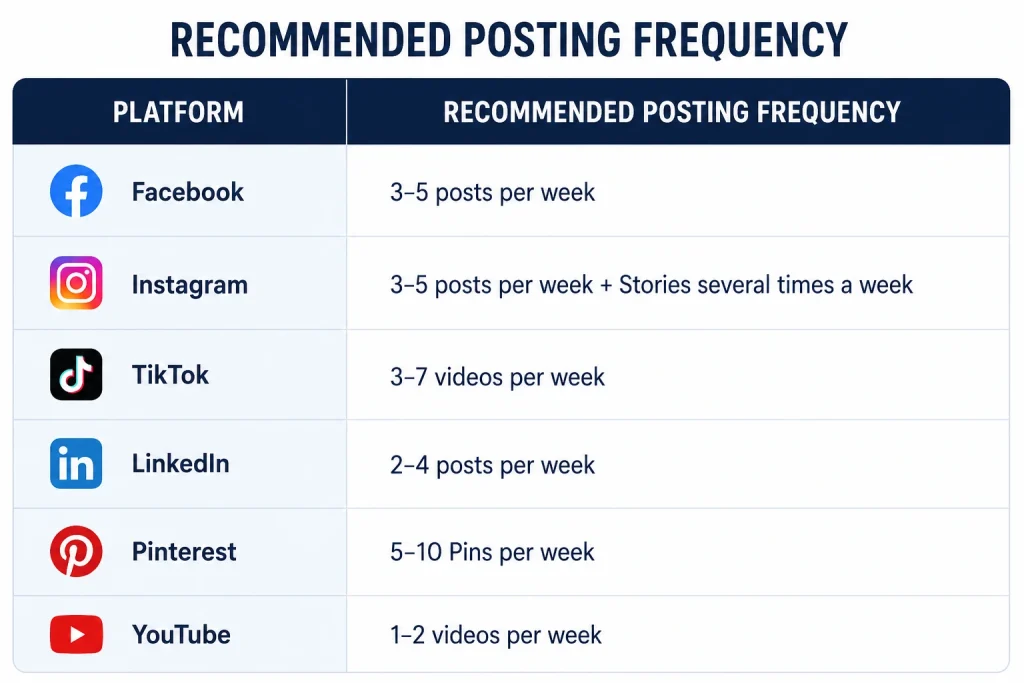
Do not worry if you are not able to post this at first. It is better to publish three quality posts every week than seven posts that are not very good. As your business grows you can slowly increase the number of times you post without making the quality of your posts worse.
Organic content is essential, but sometimes you need an extra push to reach a larger audience. That’s where paid social media advertising can make a difference.
Should Small Businesses Use Paid Social Media Advertising?
Yes. Organic content is a great way to build trust and grow your audience over time. However, if you want to reach more people quickly, social media advertising for small businesses can be a worthwhile investment.
Let’s compare these two:
| Organic Social Media | Paid Social Media |
| Free to use | Requires a budget |
| Builds long-term trust | Delivers faster reach |
| Gradual audience growth | Targets specific audiences |
| Best for engagement | Best for leads, sales, and promotions |
And make sure you do not spend money on ads without a clear goal. Make mind first. Decide whether you want more website visits, leads, sales, or brand awareness before launching a campaign.
Ready to Grow Your Business Online?
Posting on social media is not enough to create an effective online presence; you also need to have a solid plan, carry it out consistently, and keep improving. The professionals at Web Digital Lab can assist you if you want to increase brand awareness, draw in more clients, and expand your company with assurance.
Our team develops specialized digital marketing solutions that produce measurable results, ranging from SEO and content marketing to social media management and web design. Come see how we can assist your company in achieving sustainable growth by Visiting Web Digital Lab today
Common Social Media Marketing Mistakes Small Businesses Should Avoid
Many business owners of tiny businesses begin with excitement. They set up an account, post often, and hope for followers. After a few weeks, development slows, engagement declines, and frustration sets in. Sometimes, the issue isn’t a lack of effort but rather a few typical errors that can be fixed with the correct strategy.
Posting without a plan : Random outcomes are produced by random content. A specific business goal should be supported by each post.
Trying to be everywhere : Six social media profiles are not necessary for success. Managing two platforms effectively is far superior to managing six poorly.
Talking only about your business : When every single post seems like it is trying to sell something people will get bored fast. To keep people in what the company is doing it is a good idea to share helpful tips that people can use, feedback from clients who have used the service and behind-the-scenes pictures that show what the company is really like
Ignoring your audience : Social media is not a banner; it is communication. Customers can see that genuine people support your brand when you respond to their messages and comments.
Expecting instant success : It takes time to develop a devoted community. Maintain consistency, take note of your results, and continue improving your method.
Conclusion
There is one thing to remember; it is that social media is about connecting to people, not platforms.Businesses who provide material that educates, inspires, and leads to interaction are the ones that do well, but providing more content isn’t necessarily beneficial.
So do not feel overwhelmed to do everything at once. Choose a strong strategy, stay consistent, and let your results guide your next steps. Over time, these modest planned efforts can eventually transform social media marketing for small businesses into a reliable form of loyal customers, visibility, and long-term success.
Need more guidance on growing your business online? Visit Web Digital Lab
FAQs
Is social media marketing worth it for small businesses?
Absolutely. Social media gives small businesses an affordable way to reach new customers, build trust, and stay connected with existing ones.
Which social media platform should a small business focus on first?
You should start with the platform that your target audience uses the most. For example, Instagram is really good for brands that have a lot of visuals. Facebook is a choice for businesses in your local area. LinkedIn is an option for companies that sell to other businesses. TikTok is great for reaching people who are younger. It is usually better to do well on one or two platforms than spread yourself too thin.
How long does it take to see results from social media marketing?
There is no fixed timeline,for this. Most small businesses start to notice things get better after months of putting up posts all the time.
Do I need to spend money on social media ads to grow my business?
Not necessarily. Many businesses grow through organic content alone by sharing valuable posts and engaging with their audience.