If you’ve ever asked yourself how long does SEO take, you’re asking the same question almost every business. The owner asks questions before investing in SEO. Unlike paid ads that can drive traffic immediately, SEO is a slower process that builds momentum over time. That’s exactly why so many companies struggle with unrealistic expectations around SEO timelines.
The exact timeframe for SEO results is influenced by a number of factors, including website authority, competition, technical SEO, and content quality. In my opinion, companies that focus long-term SEO strategies usually experience more consistent and ongoing growth.
How long does SEO take to make results?
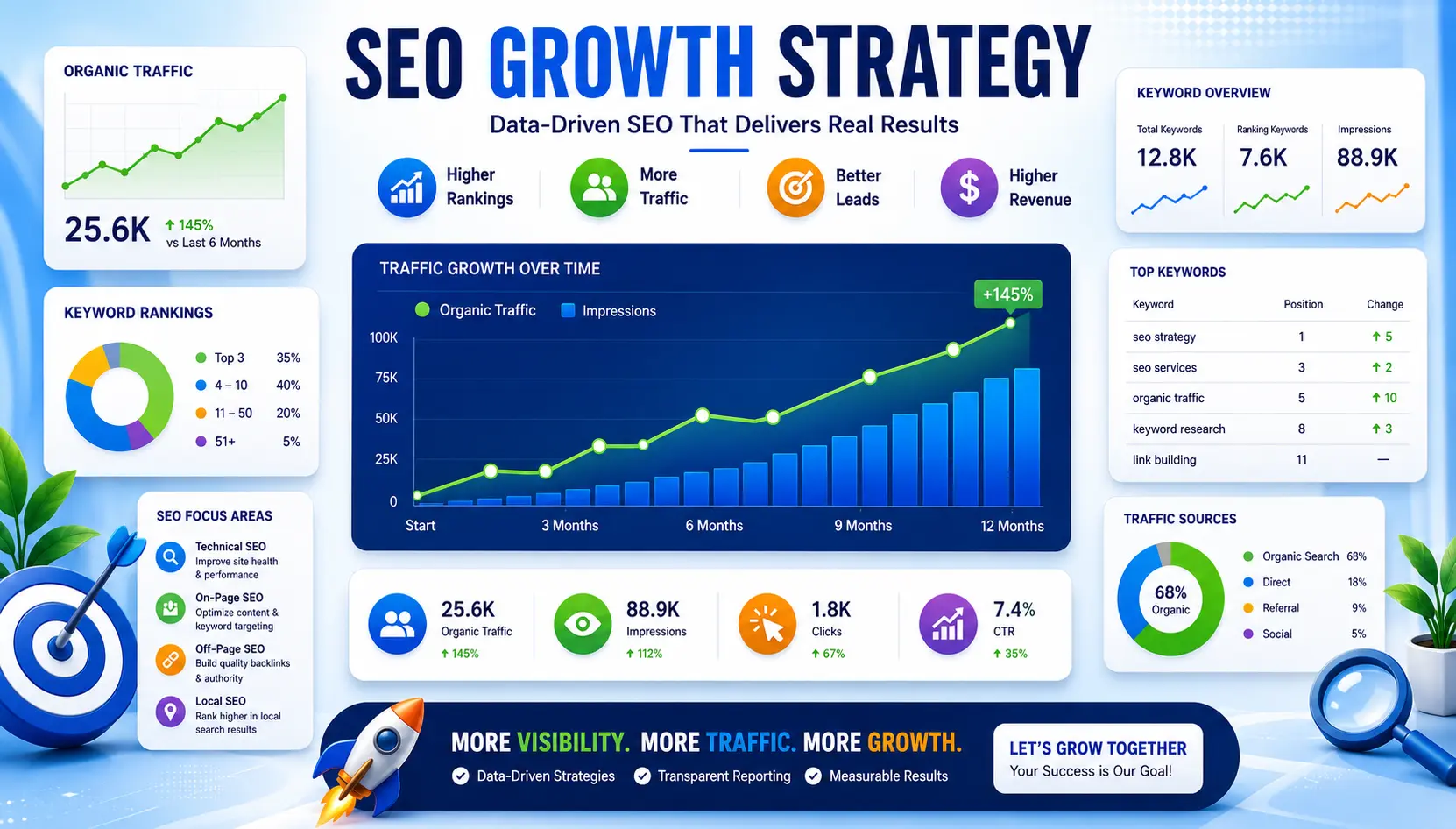
Between three and six months is when many businesses begin to see measurable SEO progress. Early SEO growth is frequently slow, particularly for more recent websites that are up against more established businesses with more online authority.
In the beginning, progress usually shows up through smaller signals before major ranking gains happen. You might observe:
- Google Search Console shows more impressions of keywords.
- Faster page indexing.
- Consistent improvements in keyword ranks.
- Persistent rise in organic traffic.
By months four to six, stronger movement often starts becoming visible if the SEO strategy is consistent and properly optimised. Rankings become more stable, targeted pages move closer to page one, and non-branded traffic begins increasing more naturally.
Why Does SEO Take Time to Work?
1. Google Indexing and Crawling Take Time
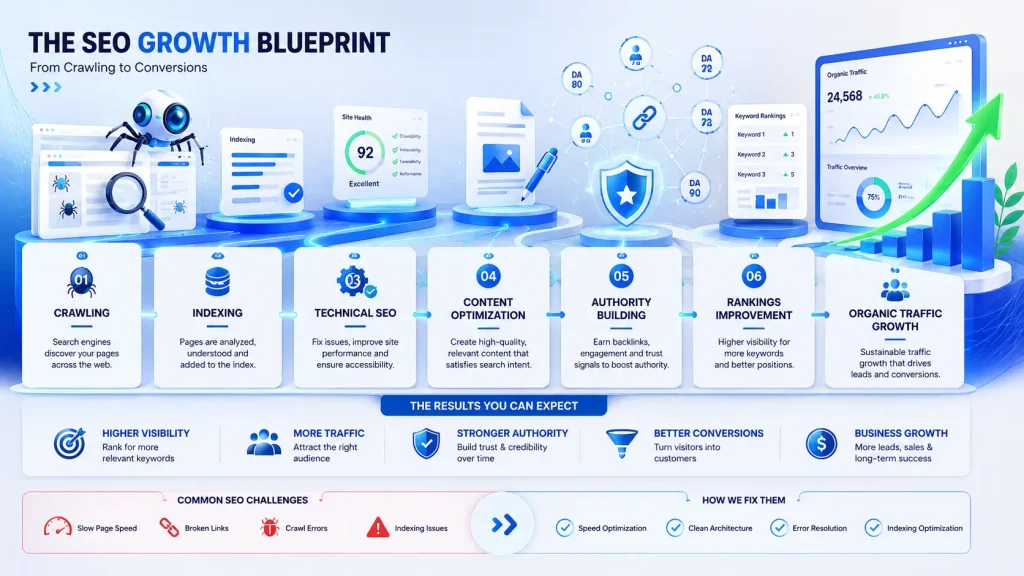
It takes time for Google to crawl to fully understand your website. Google must properly crawl, process, and index your material before websites may rank. Because search engines take time to assess user signals, content quality, and page layout, SEO effects are typically slow to materialise.
Typical technological issues consist of:
- Minimal page speed.
- Broken links.
- Crawl errors.
- Poor internal linking.
- Indexing issues.
Google explains in detail how crawling, indexing, and ranking systems work before websites can appear properly in search results.
2. Website Authority Is Built Gradually
The progressive developing of website authority is facilitated by positive engagement signals, valuable content, high-quality backlinks, and consistent SEO efforts. Because of this, older websites in the same niche often rank higher than their more current competitors.
Strong authority is usually built through:
- Quality backlinks.
- Helpful content.
- Consistent publishing.
- Positive user engagement.
- Topical relevance.
3. Ranking for Highly Competitive Keywords Takes Longer
It usually takes longer to compete for extremely competitive keywords in the absence of strong backlinks and domain authority. Long-tail and lower-competition keywords frequently result in quicker early ranking gains.
4. Low-quality Content Reduces SEO Growth
Content that lacks originality, depth, or value rarely ranks highly in today’s search results. Google prioritises content that delivers users real value and is obviously in line with search intent. Long-term organic traffic growth is typically difficult for thin or generic pages.
Modern AI and SEO strategies are also helping businesses improve content quality, optimisation, and search visibility more efficiently.
5. Technical SEO Problems Can Limit Rankings
Poor technical SEO foundations can progressively damage rankings, even in cases where the content is outstanding. SEO growth naturally slows down if Google finds it difficult to effectively crawl or comprehend your page. Ignoring even minor technological faults can lead to long-term visibility concerns.
6. Performance Is Affected by Search Intent Optimisation
Modern SEO focuses heavily on matching user intent instead of simply adding keywords into content. Pages that directly respond to user queries typically rank higher and retain greater visibility. Content that doesn’t meet search intent frequently finds it difficult to constantly compete.
7. Inconsistent SEO Efforts Reduce Momentum
SEO rewards consistency far more than irregular activity. Websites that consistently provide top-notch content and enhance their optimisation strategies tend to become more well-known over time. Before seeing any substantial gains, erratic SEO attempts can occasionally result in a loss of organic visibility and rankings.
Signs Your SEO Strategy Is Working
1. More Impressions from Google Search Keywords
Increased keyword impressions in Google Search Console are among the first indications of SEO progress. Google may start displaying your sites more frequently in search results even before traffic increases noticeably. This typically means that your website’s visibility and keyword reach are steadily increasing.
2. Faster Google Indexing
As your website’s authority grows, Google often scans and indexes new pages much more quickly. Content that used to take weeks to appear in search results may start to be indexed in a few days if you have a solid technical SEO foundation.
3. Steady Ranking Improvements
SEO growth usually happens in stages rather than overnight jumps. Pages often move gradually through search results before reaching stronger positions.
Businesses using professional SEO services often identify technical and content problems earlier, which can improve long-term ranking growth.
4. Consistent Rank Advancement
As rankings improve, organic traffic growth usually becomes more noticeable and consistent. Businesses often begin attracting more qualified visitors from non-branded searches and related keyword variations.
You’ll start to concentrate:
- Higher organic traffic.
- Broader keyword visibility.
- More focused search engine users.
- Greater possibilities for generating leads.
5. Better User Engagement Signals
Signals from user involvement frequently show whether your material is effectively fulfilling search intent. Google may consider it a favourable quality indication if users stay on your pages longer and engage with the material organically.
Strong engagement signals are the following:
- An extended period on the page.
- Lower bounce rates.
- Increased rate of clicking.
- Increased engagement on the page.
SEO Timeline for the First 12 Months
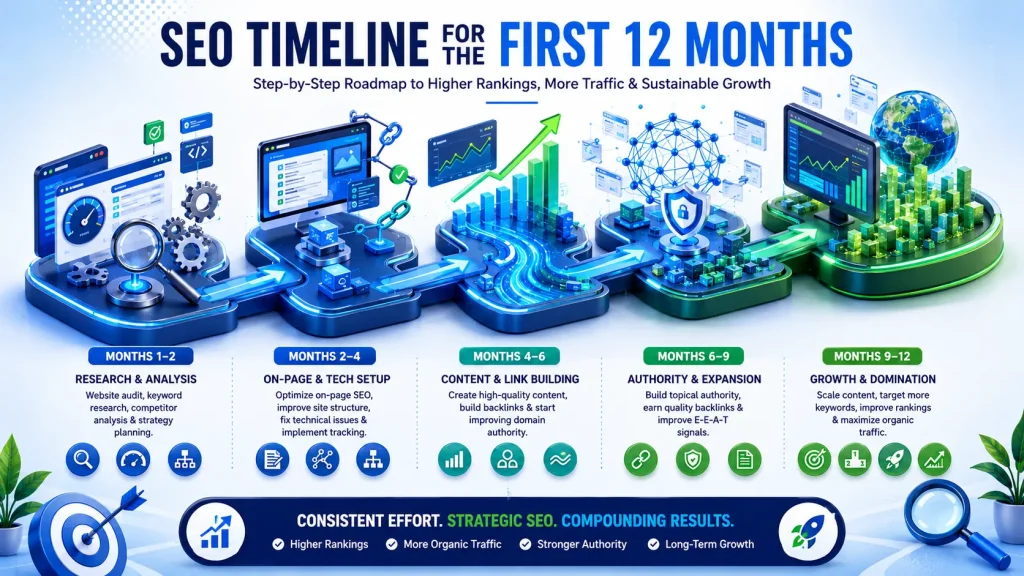
Month 1: Technical SEO Audit and Planning
Instead of targeting quick rankings, the first month of SEO is typically devoted to laying a solid foundation. This stage helps find technological difficulties that can be restricting your website’s visibility in Google search results.
Common SEO tasks during this phase include:
- Technological evaluations for SEO.
- Keyword research.
- Competitor analysis.
- Crawl verification and indexing.
- Site structure improvements.
Months 2–3: Internal Improvements and Content Optimization
This is where active SEO optimisation starts becoming visible across the website. Existing pages are improved, weak content gets expanded, and internal linking becomes more strategic to help Google better understand the site structure.
During this phase, businesses often begin noticing the following:
- Faster page indexing.
- More impressions of the keywords.
- Small ranking improvements.
- Continuing gain in organic traffic.
Months 4–6: Growth in Organic Traffic and Early Ranking Improvements
For many businesses, At this point, SEO becomes more measurable and motivating for a lot of businesses. Targeted pages rise higher in search results, rankings stabilise, and organic traffic growth is typically easier to monitor. Results still vary depending on competition and website authority, but consistent SEO efforts often begin generating noticeable momentum during these months.
Months 6–9: Developing a Backlink Profile and Website Authority
Once the technical and content foundation is stronger, the focus usually shifts toward building website authority. Backlinks, topical relevancy, and overall content depth are examples of trust signals that Google is beginning to pay more attention to.
This phase often includes:
- Earning quality backlinks.
- Publishing deeper content clusters.
- Improving topical authority.
- Increasing brand visibility online.
Months 9–12: Expanding Topical Authority and Keyword Reach
Websites may start to show up for dozens or even hundreds of similar queries and long-tail variations, rather than just a few target keywords. Businesses that remain loyal to SEO for the first year typically see increased authority, a broader keyword reach, and a more reliable source of long-term organic traffic.
Need help building a long-term SEO strategy? Contact us for a complete website review and optimization plan.
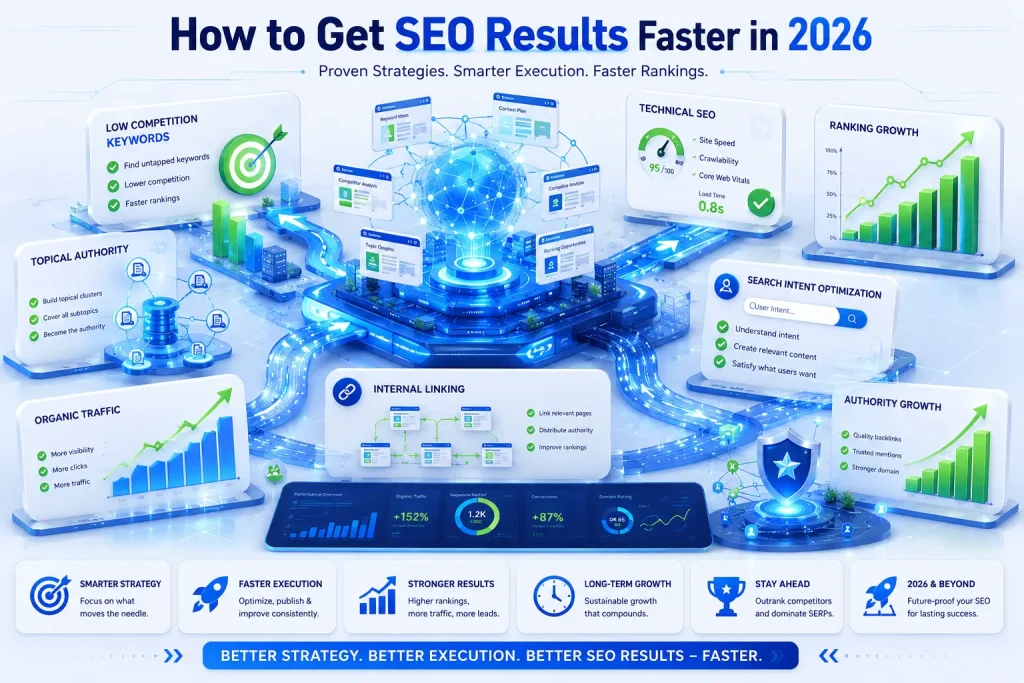
How to Get SEO Results Faster in 2026
1. Focus on Low-Competition Keywords First
When compared to extremely competitive wide searches, long-tail keywords typically rank higher and get more targeted visitors. These small achievements eventually help in the growth of website authority.
Following trusted SEO best practices and search engine guidelines can help businesses build a stronger long-term SEO foundation.
2. Improve Technical SEO Early
Resolving technical SEO issues early on may significantly speed up ranking increases. Faster page speeds, a clear site structure, better crawlability, and suitable indexing help search engines handle your website more efficiently. In many cases, technical improvements create noticeable SEO gains within the first few months.
3. Build Strong Topical Authority
Websites that show subject-matter understanding are increasingly rewarded by Google. Instead of publishing random blog articles, businesses can focus on creating relevant content regarding related subjects. Long-term rankings and keyword reach are frequently enhanced by strong topical authority.
4. Strengthen Your Internal Linking Structure
Internal linking helps search engines understand the connections between pages and distributes authority throughout the website. Additionally, a well-designed linking structure enhances crawl performance and facilitates more natural information navigation for consumers. This straightforward but incredibly powerful SEO strategy is overlooked by many websites.
5. Create Content That Matches Search Intent
Instead of concentrating just on keyword placement, content should directly address what consumers are truly seeking. Check our keyword research guide for more practical tips. Pages that naturally and clearly accomplish the user’s goal are more likely to rank higher and produce more engagement signals.
Final thoughts
Stronger organic traffic growth and long-term exposure usually happen over six to twelve months of constant optimisation, even though early ranking increases could show up within the first few months.
FAQs
When does SEO begin to show results?
Most websites begin to see early SEO signs, such as keyword impressions and modest ranking gains, within three to six months. Depending on the level of competition and website authority, stronger organic traffic growth and competitive rankings typically take longer.
In 2026, is SEO still relevant, or is it changing?
SEO is still in use and is changing quickly. Search intent, content quality, user experience, and authority are increasingly more important to Google than antiquated methods like keyword stuffing.
Will AI replace SEO?
AI may speed up content discovery and optimisation, but it won’t completely replace SEO. Businesses still require human strategy, knowledge, innovative thinking, and user-beneficial content.
How can I tell if my SEO is functional?
Higher keyword impressions, higher ranks, more organic traffic, quicker indexing, and enhanced engagement metrics like click-through rates and time on page are typically signs of improved SEO.
Why do changes to Google’s algorithm impact SEO rankings?
Changes to Google’s algorithm affect how search engines assess website authority, user experience, relevancy, and material quality. Depending on how well a website meets Google’s most recent ranking criteria, these changes may result in rankings rising or falling.