
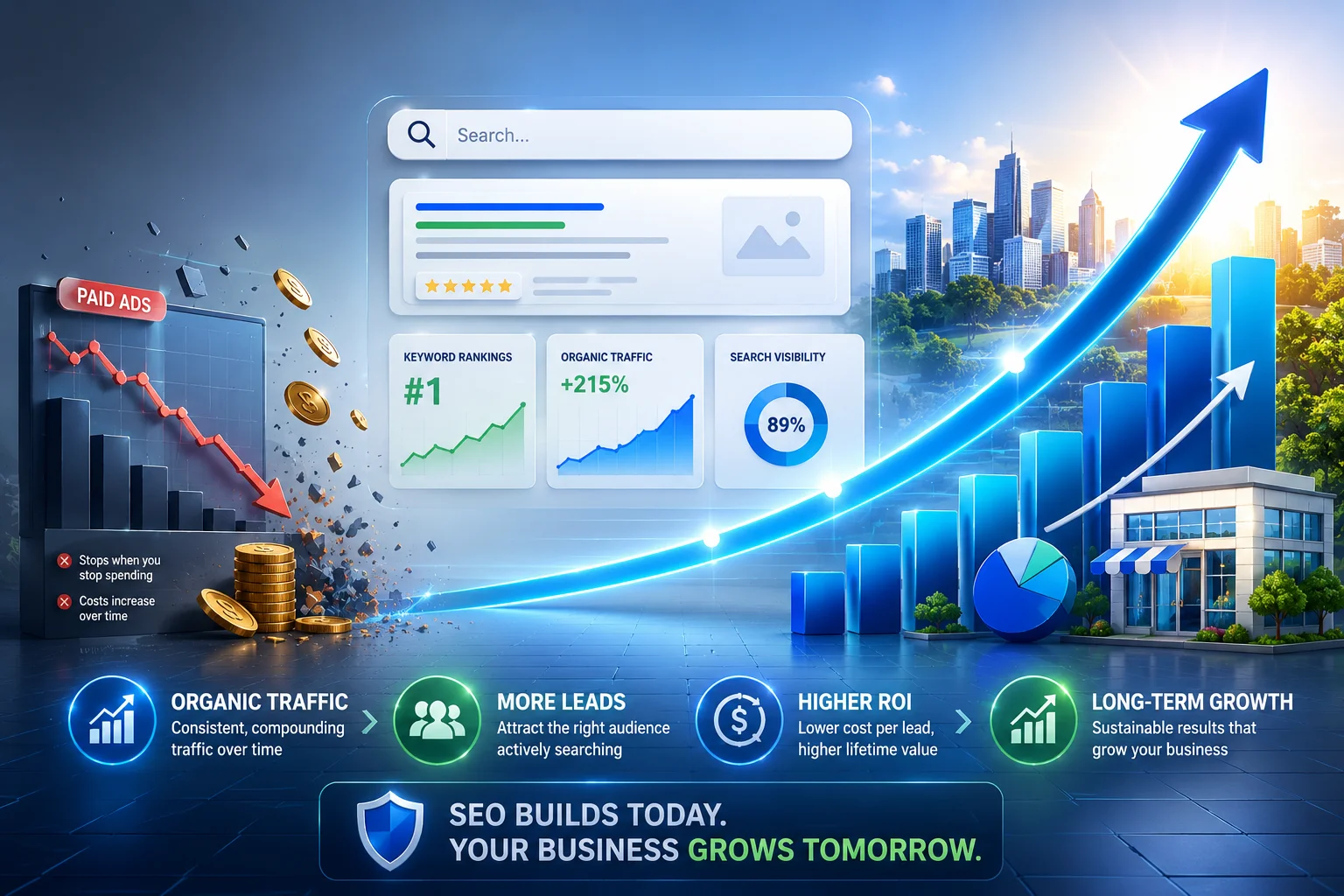
Every year, thousands of small business owners face the same difficult decision: should they keep spending money on advertising that stops working the moment the budget runs out or invest in something that can generate customers more consistently over time? With marketing costs rising and competition increasing across almost every industry, it’s reasonable to question whether SEO still deserves a place in the budget.
If you’ve been asking yourself, ‘Is SEO worth it for small business, the answer depends less on SEO itself and more on how it’s approached. Due to the initial expenses, the length of time it takes to see benefits, and the conflicting web advice, most businesses are hesitant. When done wisely and with reasonable expectations, SEO continues to be one of the most economical long-term marketing expenditures.
Why Are Small Businesses Still Investing in SEO in 2026?
Despite AI search summaries, paid ads, and social media algorithms shifting constantly, small businesses are still putting budget into SEO. Not because it’s trendy, but because search behaviour hasn’t really changed at the core level.
1. How Consumers Find Local Businesses Today
Social media advertisements are not the first thing people go for when they need a dentist, plumber, or marketing firm. They open Google search and type in a specific query, such as “SEO agency for small business” or “emergency plumber near me”.
That moment is important because intent is already built in. The customer isn’t browsing; they’re choosing.
2. The Growing Importance of Organic Search Visibility
Paid ads can place you at the top, but users increasingly scroll past them. Organic listings still carry more trust because people assume they’re earned, not bought.
And in local searches, that trust matters even more. One solid organic placement can outperform multiple ad clicks if the intent is strong enough.
3. Why Does SEO Remain Relevant Despite AI and Paid Advertising?
Although AI tools are altering the way answers are presented, they continue to rely on websites. You’re just not a part of that ecosystem if your company doesn’t have excellent content and exposure.
Additionally, the cost of paid advertisements continues to rise. Because it doesn’t rely on daily bidding fights, SEO quietly remains important in that situation.
What Makes SEO Valuable for Small Businesses?
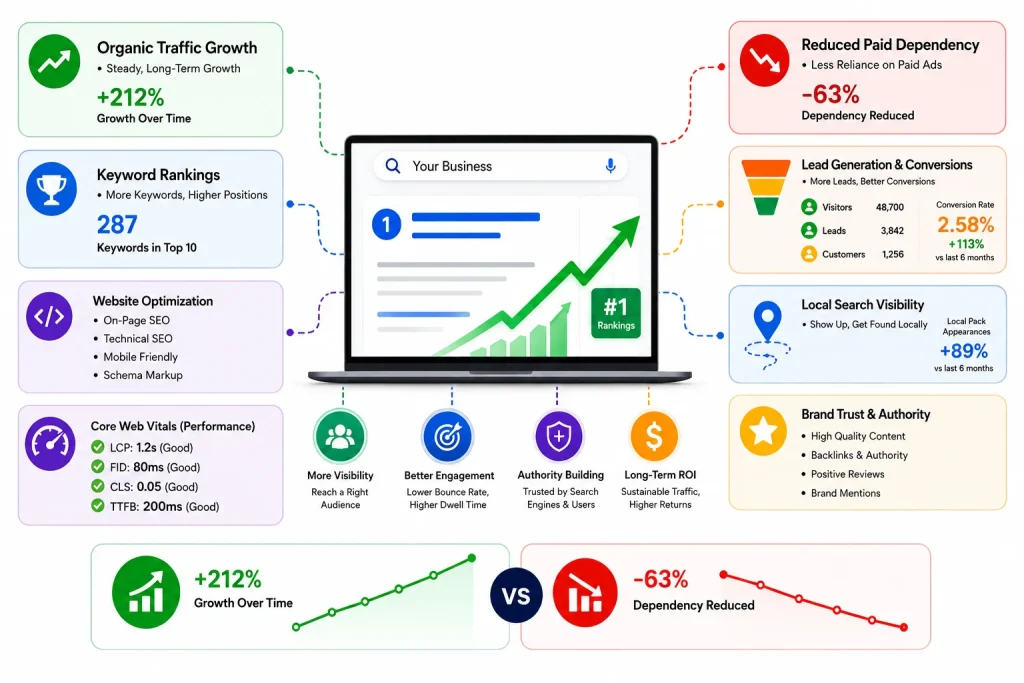
SEO isn’t valuable because it’s “marketing”. It’s valuable because it changes how customers find you without you paying for every click.
1. Helps Potential Customers Discover Your Business
When your website ranks for the right searches, you’re showing up in front of people already looking for your service. That’s very different from interrupting someone’s feed with an ad.
2. Generates Consistent Traffic Without Paying Per Click
Unlike ads, organic traffic doesn’t stop when you pause spending. It compounds if the foundation is strong.
3. Builds Brand Credibility and Trust
People tend to assume higher-ranking businesses are more established, even if that’s not always true. Visibility creates perception.
4. Improves Website Experience and Engagement
Good SEO forces you to fix slow pages, confusing navigation, and unclear messaging. Even if rankings weren’t involved, those improvements alone often increase conversions.
Metrics such as core web vitals help businesses measure and improve important aspects of website performance, including loading speed, responsiveness, and visual stability.
5. Supports Long-Term Business Growth
- More consistent inbound leads.
- Reduced dependency on paid ads.
- Better brand recognition over time.
- Higher conversion rates from warm traffic.
Understanding the ROI of SEO
SEO ROI isn’t immediate, which is where most misunderstandings happen.
1. How SEO Creates Value Over Time
Early months usually involve setup, content creation, and fixing technical issues. The return starts showing when multiple pages begin ranking together, not just one keyword.
A well-planned content strategy helps businesses build authority and improve long-term SEO performance over time.
2. Comparing SEO Costs to Customer Lifetime Value
A simple way businesses miss SEO value is by focusing only on cost per month. If a customer brings $1,000 over time and SEO brings you 20–30 customers a month, the return is not about ranking; it’s about acquisition math.
3. Metrics Small Businesses Should Track
- Organic traffic growth.
- Number of qualified leads.
- Conversion rate from search traffic.
- Revenue from organic channels.
- Keyword movement for high-intent terms.
How Much Does SEO Cost for a Small Business in 2026?
Costs vary a lot depending on competition, industry, and goals. A local bakery won’t spend the same as a law firm.
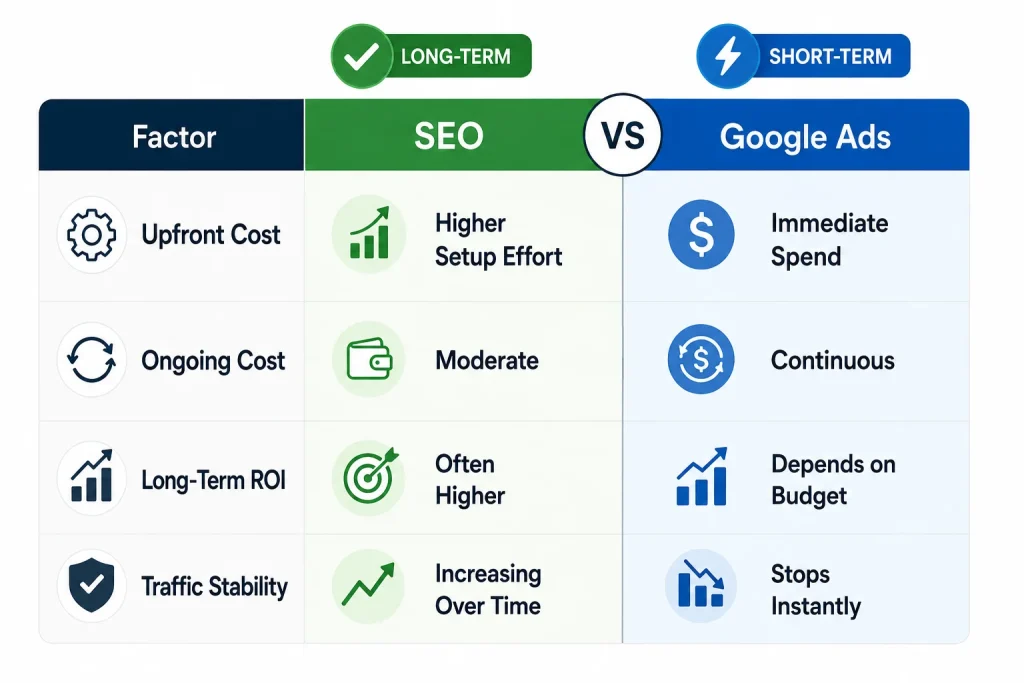
1. DIY SEO vs Professional SEO Services
Local businesses with basic needs or extremely small websites can benefit from DIY SEO. However, when content, technological changes, and link building are involved, it quickly becomes time-consuming.
If your website isn’t generating enough traffic or leads, our professional SEO services can help improve visibility and drive sustainable growth.
2. Monthly SEO Pricing Ranges: Factors That Influence SEO Costs
3. Factors That Influence SEO Costs
- Competition level in your industry.
- Size of your website.
- Number of locations (for local SEO).
- Content requirements.
- Technical SEO complexity.
When SEO Is a Smart Investment and When It May Not Be?
SEO isn’t equally effective for every business model, and that’s where expectations need to be realistic.
1. Businesses That Usually Benefit Most from SEO
- Local service providers (plumbers, clinics, salons).
- B2B service companies.
- E-commerce stores with niche products.
- Businesses with long-term customer value.
2. Situations Where SEO Might Not Deliver Fast Results
- Businesses needing immediate leads within days.
- Very new websites with zero authority.
- Highly seasonal businesses relying on short bursts of demand.
3. Common Expectations That Lead to Disappointment
Most frustration comes from expecting SEO to behave like ads. It doesn’t scale instantly. It builds gradually and unevenly at first.
Is paid advertisement or SEO a better value?
This is not really an either-or decision anymore.
1. Short-Term Results vs Long-Term Growth
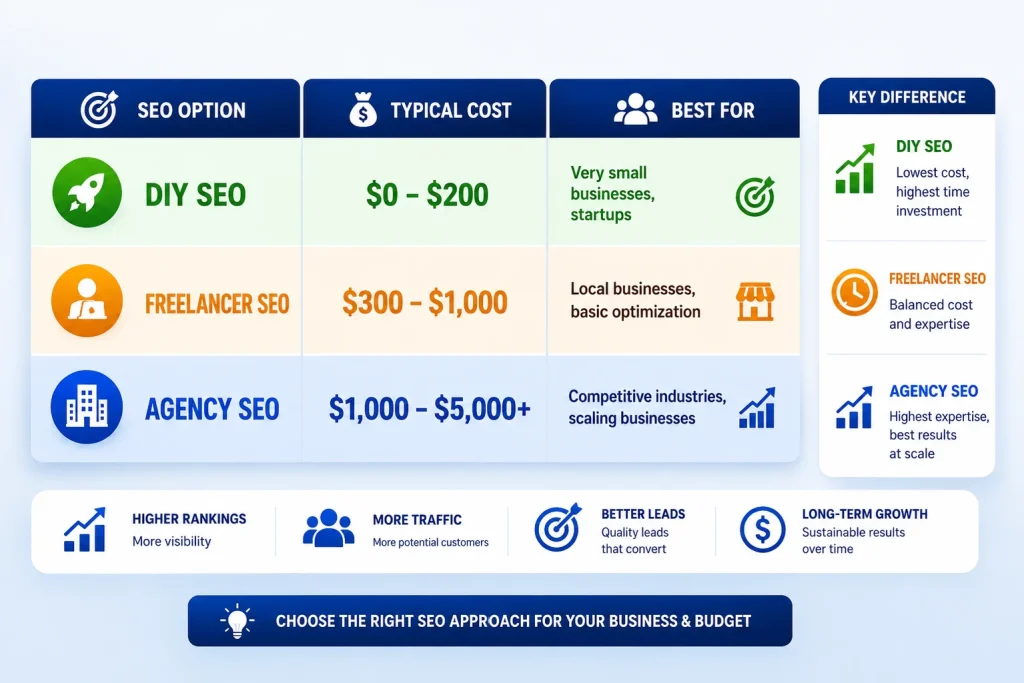
Paid ads work quickly but stop when funding stops. SEO takes longer but continues generating traffic once established.
2. Cost Comparison Over Time
3. Why Many Small Businesses Use Both
What I’ve seen work best is using ads for immediate leads while SEO builds long-term visibility in the background. One supports cash flow; the other builds stability.
Local SEO
For most small businesses, this is where SEO actually pays off fastest.
1. Why Local Search Matters More Than Ever
People search with location intent more than ever: “near me”, “open now”, and “best in [city]”. These searches convert quickly because the decision is usually immediate.
2. Make Your Google Business Profile More Effective
The first impression is frequently formed by your Google Business Profile. In many cases, it drives more clicks than your website.
3. Earning Reviews and Local Trust Signals
Reviews are not just reputation; they directly influence visibility and conversion rates. A business with fewer reviews but better optimisation often loses to one with stronger signals.
4. Creating Location-Focused Content
Pages tailored to specific areas (cities, neighbourhoods) help you show up in multiple local searches instead of competing broadly.
Following proven local SEO tips can help small businesses improve visibility in local search results and attract more nearby customers.
Common Reasons Small Business SEO Campaigns Fail
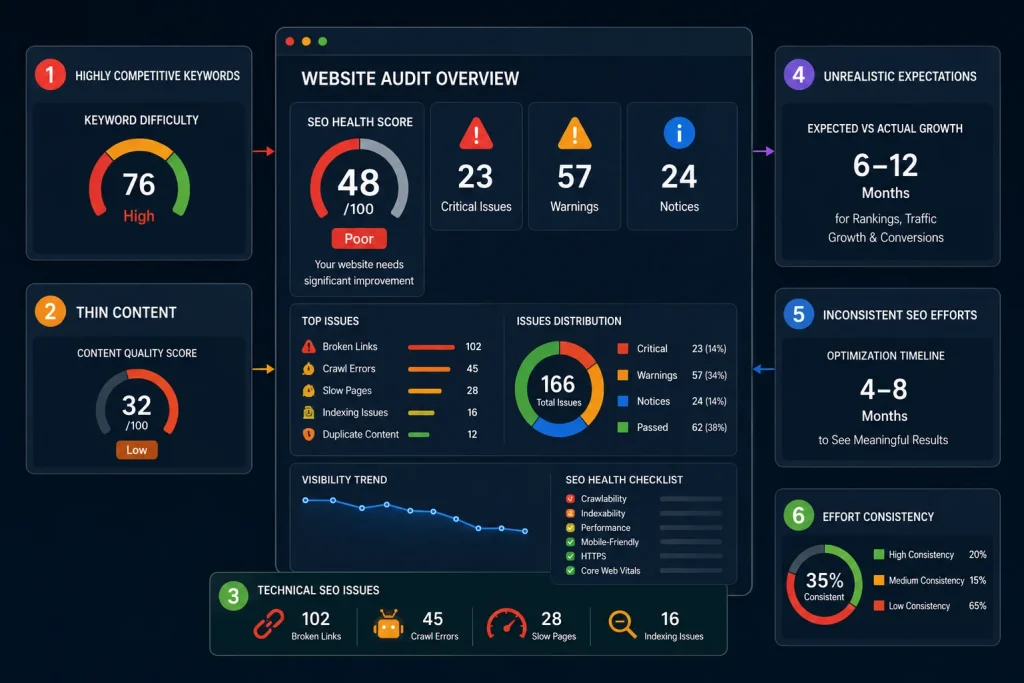
Most SEO failures don’t come from “bad SEO”. They come from misalignment.
- Targeting Highly Competitive Keywords Too Early.
- Publishing Thin or Low-Quality Content.
- Neglecting technical SEO problems.
- Looking for quick outcomes.
- Optimisation efforts are inconsistent.
SEO Priorities for Small Businesses
The majority of small enterprises overcomplicate SEO. Usually, the beginning is easier than expected:
- Pay Attention to Local Search Visibility.
- Focus on Long-Tail, High-Intent Keywords.
- Improve Core Website Pages.
- Create Helpful Content Regularly.
- Track Performance and Adjust.
Contact our SEO experts to discuss your objectives and receive expert advice specific to your field if you’re considering whether SEO is the best investment for your company.
Final Thoughts
It requires dedication, consistency, and a firm knowledge of your objectives. But when done right, it becomes one of the only marketing platforms that can reduce dependency on paid ads while consistently increasing new leads.
Results are variable, costs vary, and timelines span many months. However, for businesses that can afford to look beyond short-term tactics, SEO often becomes the most dependable source of qualified traffic over time. The real question is not if SEO works, but whether your business can dedicate itself long enough for it to be successful.
FAQs
Does SEO help a small business on a low budget?
Yes, but only if you focus on local SEO and high-intent keywords rather than trying to compete broadly.
Can a small firm manage SEO without working with an agency?
Basic SEO may be managed internally, but it takes perseverance and patience.
What is the appropriate amount of money for a small business to spend on SEO?
Most small businesses spend between $500 and $3,000 each month, depending on their goals and degree of competition.
Which kind of small businesses benefit most from search engine optimisation?
Companies with loyal clients and local services usually benefit the most.
What makes local SEO different from SEO?
In fact, the primary goals of local SEO are location-based searches, Google Business Profile optimisation, and reviews.