
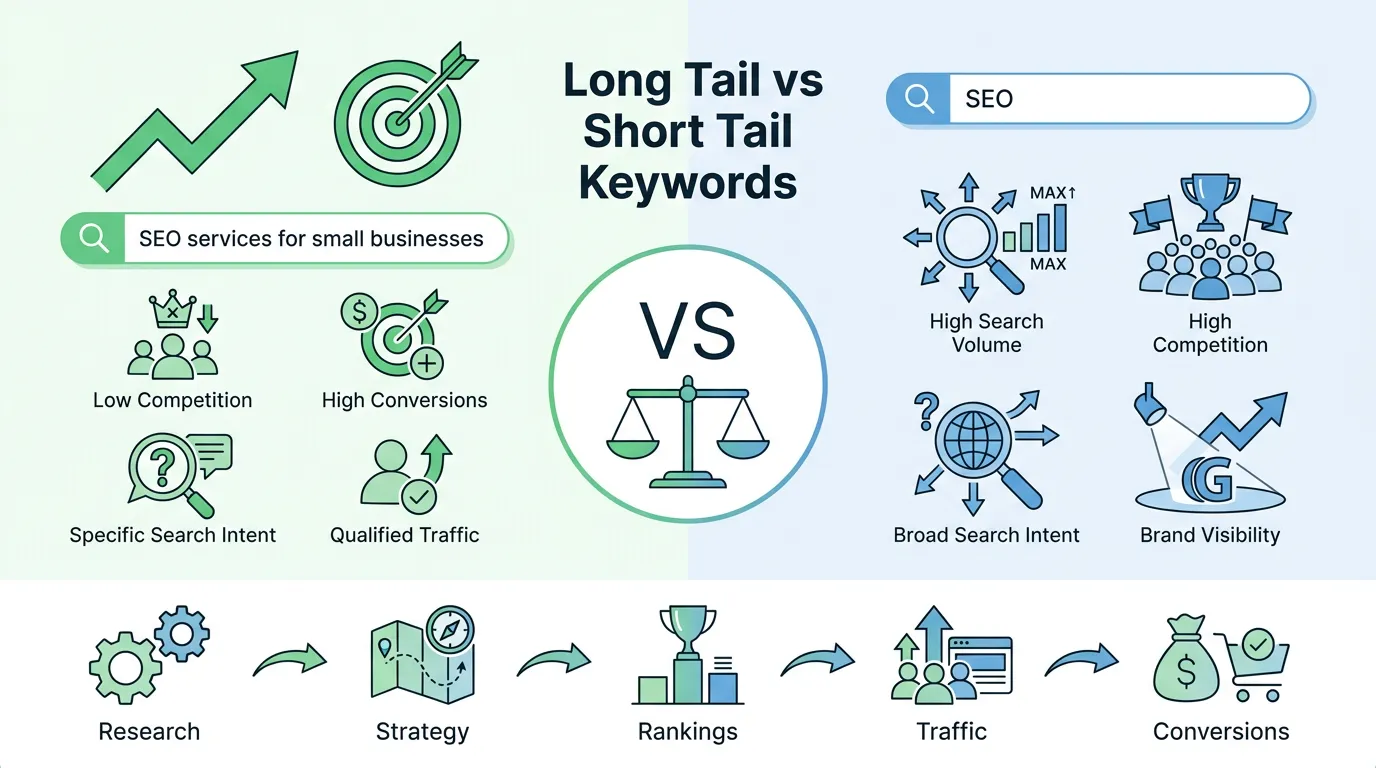
Long tail keywords are longer, more specific search queries with lower competition and higher conversion potential. Short tail keywords are broader, have higher search volume, and are much harder to rank for. Both play important roles in SEO, but knowing when to use each can significantly improve your rankings and traffic.
When it comes to understanding long tail vs short tail keywords, it’s not about selecting one over the other. Learning when each type works for your SEO strategy is key. You’ll learn the main differences, practical examples, and strategies for using both types of keywords to bring in the appropriate audience and improve your search engine ranking in this article.
Key Takeaways
- Ranking for long tail keywords is easier.
- Short tail keywords are more competitive but have a higher search volume.
- Long tail keywords usually lead to higher conversion rates.
- Both are used in a balanced strategy.
- Select keywords according to your SEO goals.
What Are SEO Keywords?
SEO keywords are the words and phrases people type into search engines to find information, products, or services. They enable search engines to understand what your content is about and match it with relevant searches.
Keywords can be broad or very specific, depending on what the consumer wants. Understanding the differences between long tail and short tail keywords will help you match your content to the correct search intent and attract more relevant traffic.
Examples:
- Short tail keyword: SEO.
- Long tail keyword: SEO services for small businesses.
What Are Short Tail Keywords?
Short tail keywords are broad search terms that usually contain one or two words. They typically have high search volume, high competition, and broad search intent, making them more difficult to rank for.
Examples of short tail keywords:
- SEO.
- Digital marketing.
Key characteristics of short tail keywords:
- High search volume.
- High competition.
A user looking for “SEO” may be trying to find a definition, an agency, training, or tools. Because of their broad nature, short tail keywords frequently increase traffic but do not always result in conversions.
What Are Long Tail Keywords?
Long tail keywords are specific search phrases that usually contain three or more words. Due to their lower search volume and more prominent search intent, they are more targeted for and more likely to attract quality visitors.
Examples of long tail keywords:
- SEO services for small businesses.
- Local SEO for small businesses
- Best CRM software for startups.
- Running shoes for flat feet.
- Affordable web design services near me.
Key characteristics of long tail keywords:
- Lower search volume.
- Lower competition.
- Clear and specific search intent.
For example, a person looking for “SEO services for small businesses” is far more likely to find a service than someone searching up “SEO.” Because of this, long tail keywords often lead to better conversion rates and higher-quality traffic, specifically for new and developing businesses.
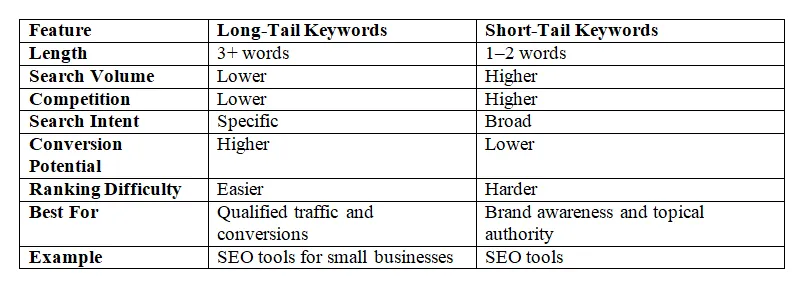
Long Tail vs Short Tail Keywords: Key Differences
1. Keyword Length
Short tail keywords are compact and general. Long tail keywords add context, qualifiers, and intent. That extra length isn’t fluff; it’s clarity.
2. Search Volume
Short tail terms often look attractive because of high volume. However, volume and worth are not the same. Long tail keywords bring less traffic but more of the right traffic.
3. Competition Level
Short tail keywords are overshadowed by high-authority sites. Ranking for them usually takes years and serious resources. Long tail keywords face less competition, which means faster traction.
Lower competition can also influence how long SEO takes to produce measurable results.
With SEO tools like Ahrefs and Semrush, you can analyze keyword difficulty, look into competitor ranks, and identify long tail chances with less competition.
4. Search Intent
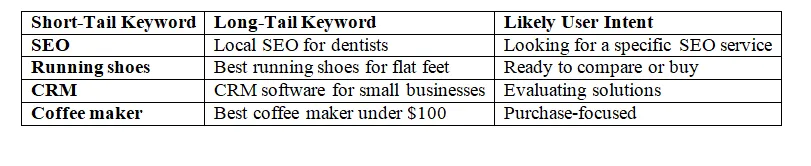
Intent is where the real separation happens. Short tail searches are vague. This is because search intent plays a major role in SEO success. This is also becoming increasingly important with GEO optimization, where AI-powered search engines prioritize intent-driven, answer-focused content.
Long tail queries typically represent a specific issue or goal. Because of this goal-driven clearness, long tail keywords for SEO consistently beat broader terms for lead generation.
While someone who looks for “SEO agency for SaaS companies” is more likely to look up prices or compare services, someone who searches for “SEO” may simply be looking for basic information.
5. Conversion Potential
Because visitors already know what they’re looking for, long tail keywords frequently result in greater conversion rates.
For example, searching for “laptop” may reveal browsing. However, a search for “best lightweight laptop for graphic design under $1,500” has a far higher buy intent and less competitive.
How Do Long Tail and Short Tail Keywords Work Together?
Short tail keywords increase topical authority and awareness. Long tail keywords are ideal for blog posts, service pages, and conversion-focused content.
Instead of replacing short tail keywords, an effective long tail keyword strategy enhances them. On-page SEO helps you place both keyword types naturally throughout your content without over-optimization.
Why Long Tail Keywords Are Often Better for SEO?
Long tail keywords usually result in better SEO results with a lot less effort for the majority of businesses, especially service-based ones. In my experience, they’re easier to rank for, attract visitors who know what they want, and align much more in line with the real search methods used by users. You’re not fighting massive brands for attention; you’re meeting users at the moment they’re ready to act.
- Faster ranking opportunities due to lower competition.
- Better alignment with user intent.
- Higher conversion rates and user engagement.
These long tail keyword benefits often matter more than raw traffic numbers. Ten qualified visitors beat a thousand uninterested ones every time.
Want expert help growing your traffic and rankings? Check out our SEO services to see how we help businesses grow.
When Should You Use Short Tail Keywords?
Short tail keywords may still be beneficial in an overall SEO strategy regardless of these challenges. They are not the best option for quick wins, but they are useful when your website already has authority or when visibility is more vital than rapid conversions. When applied properly, they encourage long-term development as compared to immediate outcomes.
Following guidance from Google Search Central can help you build a sustainable SEO strategy focused on long-term growth.
Short tail keywords are valuable when:
- You have a lot of domain power already.
- Increasing consumer awareness of your brand is your aim.
- You’re supporting paid search or awareness campaigns.
Knowing when to use short tail keywords comes down to timing and resources—not ambition alone.
How to Choose Between Long Tail and Short Tail Keywords?
When doing keyword research, one of the most common mistakes made is to prioritize search volume over search intent. According to a number of SEO professionals, concentrating on the right keywords first is significant. It helps to know exactly what you want that website to do before choosing a keyword.
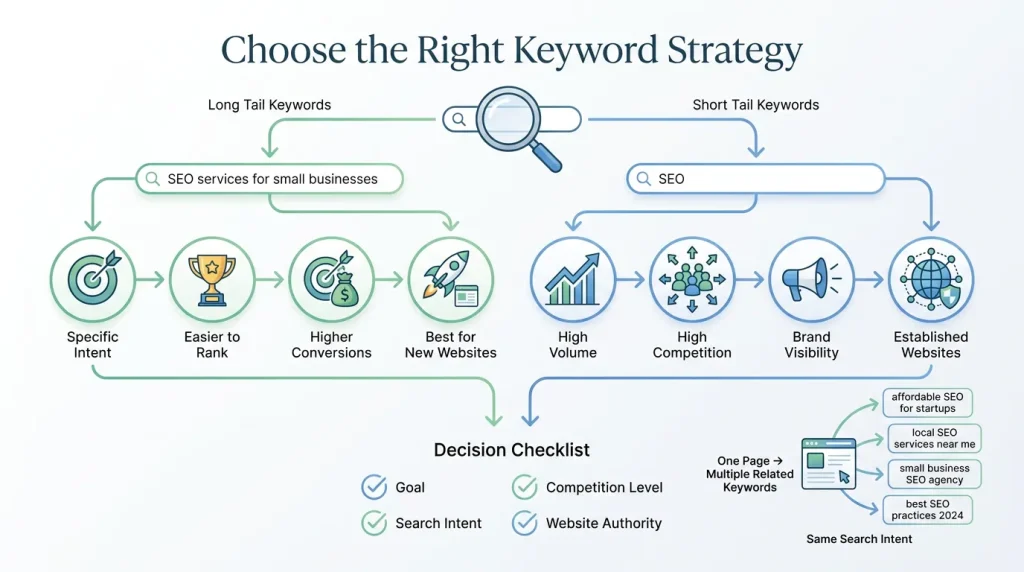
You may get keyword ideas and estimate search traffic with tools like Google Keyword Planner, but don’t rely just on volume. Always take into account your ability to compete for the keyword and the purpose of the search.
Consider this:
- Is the purpose of this content to qualify leads, sell, or educate?
- Do I currently require conversions or visibility?
This way of thinking keeps your SEO strategy based in reality and makes it easier to choose
When to use long tail keywords against larger terms.
Should Beginners Target Long Tail Keywords?
Yes, long tail keywords attract qualified visitors and have less competition, so beginners should concentrate on these. For instance, targeting “SEO services for small businesses” is typically simpler than competing for the keyword “SEO.”
Can Long Tail Keywords Increase Conversions?
Yes, long tail keywords frequently lead to higher conversion rates because they clearly target consumers. For example, when someone looks for “best CRM software for startups,” they are generally closer to making their decision than when they search for “CRM.”
Can One Page Rank for Both?
Yes. A single page may rank for both long tail and short tail keywords If they have the same search intent. You can gain engagement without stuffing your content with keywords by using related keyword options organically.
Struggling to rank consistently? Strong content marketing services help businesses build topic clusters around both long-tail and short-tail keywords.
How to Use Long Tail and Short Tail Keywords in Your Content?
Short tail and long tail keywords are combined in a well-structured keyword strategy to concentrate on various stages of the customer journey. Problems usually happen when they are joined without a plan.
Make use of short tail keywords in:
- Core topic pages.
- High-level category content.
Long tail keywords are employed in:
- Blog posts.
- FAQs.
- Service subpages.
Example website structure:
- Service page: SEO Services (short tail keyword)
- Blog post: Long Tail vs Short Tail Keywords.
- Blog post: Local SEO for Small Businesses.
- Blog post: How Long Does SEO Take?
This approach helps your main pages target broader terms while supporting articles capture more specific searches.
Evaluate the success of your content in Google Search Console after it has been published to figure out which long tail and short tail keywords generate impressions, clicks, and ranks.
Contact us if you want a tailored SEO strategy for your business and a clear roadmap to increase rankings, traffic, and real conversions.
Which Keyword Type Is Right for Your Goals?
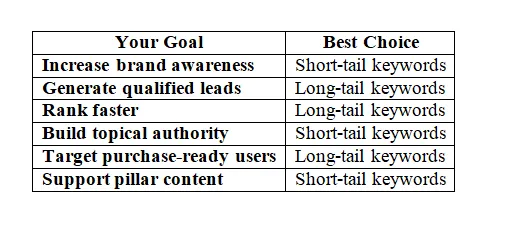
If you have low authority or are launching a new website, target long tail keywords. Choosing the right keyword strategy is just one part of understanding the different types of SEO that contribute to long-term rankings. They normally provide higher conversion rates, get more qualified traffic, and are simpler to rank for.
To enhance your visibility and create topical authority, gradually focus on short tail keywords as your website gets bigger in size and authority. Use a balanced strategy containing both types of keywords for the best long-term SEO results.
Struggling with an outdated or underperforming website? Our website design and development services create SEO-friendly, high-performing websites built to support long-term rankings, traffic, and conversions.
Common Long Tail vs Short Tail Keyword Mistakes
Most SEO problems are caused by incorrect assumptions rather than poor tools. Seeking large numbers without considering intent often results in time wastage and poor results. In spite of the fact that it may feel limiting, growth typically begins with clarity. Understanding the distinction between long tail vs short tail keywords is important because it enables you to focus more on real, intent-driven growth and less on irrelevant analytics.
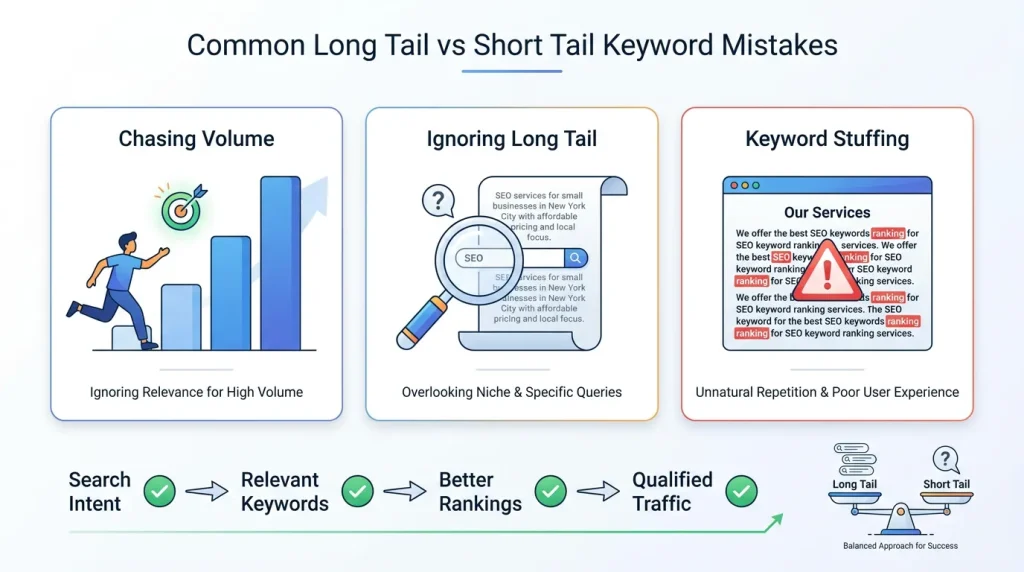
Common mistakes include:
- Chasing volume aimlessly.
- Neglecting long tail prospects.
- inserting keywords in inappropriate places.
Many SEO campaigns fail because they overvalue short tail keywords and overlook the impact of long tail, intent-driven searches.
Final Thoughts
Long tail keywords are the greatest place to start for most small businesses and newer websites because they are easier to rank for and attract more quality visitors. If you’re still deciding whether investing in SEO makes sense, learn whether SEO is worth it for small businesses. You can increasingly target more competitive short tail keywords to increase your visibility as your site’s authority increases.
Not sure which keywords to target first? Contact us for a personalized SEO strategy tailored to your business goals, industry, and competition.
FAQs
Are Short Tail Keywords Bad?
No, short tail keywords are useful for increasing topical authority and brand awareness. They are preferred for well-known websites with greater authority, though, because they are highly competitive and typically more difficult to rank for.
Which keywords are better for beginners?
Long tail keywords are usually better for beginners because they’re easier to rank for and attract more qualified traffic.
How Many Long Tail Keywords Should One Page Target?
Focus on a single main keyword and naturally include a number of closely related long tail variations throughout the content. This keeps the material focused while increasing relevance and helping your page rank for several relevant searches.
Is it possible to combine long tail and short tail keywords?
Yes, and you unquestionably will. The strongest SEO strategies combine both to support visibility and conversions.
Are blogs the only ones that use long tail keywords?
No. They are quite effective for landing sites, service pages, and even sponsored advertisements.